All Categories
Featured
Table of Contents
Current data for 2026 shows a significant shift in how individuals approach their health and life insurance needs. For many living in the local community, the selection process has become more data-driven than in previous years. Policyholders are no longer simply renewing existing plans. Instead, they are analyzing how 2026 Medicare adjustments and new life insurance riders affect their monthly budgets. High interest rates and shifting federal regulations have modified the pricing structures for many popular products, making an annual review of Term Life Insurance essential for every household.
Medicare Advantage Trends and Selection Strategies for 2026
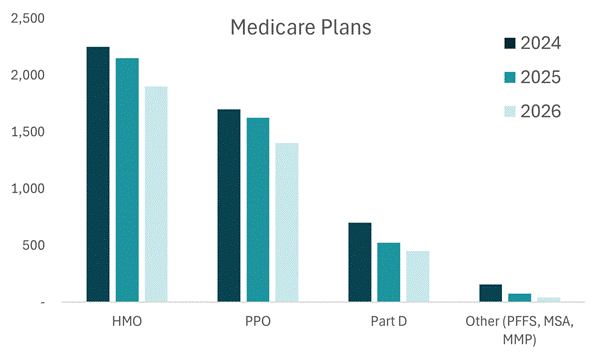
Medicare Advantage plans continue to see high enrollment numbers in 2026, though the benefit structures have undergone noticeable changes. Many carriers have tightened their networks to control costs, which means checking provider lists is a mandatory step for residents in your local area. In 2026, the trend of including non-medical benefits like grocery allowances or transportation has slowed, with insurers instead focusing on reducing out-of-pocket maximums for core medical services. This shift reflects a move toward financial stability for the plans after several years of aggressive expansion.
Consumers often prioritize Harmony SoCal Insurance Services Agency when reviewing their annual coverage options. This focus helps them determine if the current year's plan still aligns with their physical and financial requirements. For those who prefer more predictable costs, Medicare Supplement plans, particularly Plan G and Plan N, remain top contenders in 2026. While these plans typically have higher monthly premiums than Advantage plans, they offer the freedom to see any doctor who accepts Medicare without needing a referral. This distinction is proving vital for seniors in the region who travel frequently or have complex health conditions requiring specialists.
Navigating Part D Prescription Drug Changes in 2026

The 2026 calendar year marks a major milestone for prescription drug coverage. The out-of-pocket cap for Medicare Part D is now firmly established at $2,000, a change that has drastically altered the cost-benefit analysis for many seniors. While this cap provides a safety net for those with high-cost medications, some insurance companies have responded by increasing monthly premiums or changing their drug formularies. It is common in 2026 for a medication that was on a preferred tier last year to be moved to a non-preferred tier this year. Checking the specific formulary for each plan is the only way to avoid surprise costs at the pharmacy counter.
Furthermore, Harmony SoCal Insurance Services Private Coverage offers a way to manage long-term risks during retirement. When combined with a solid health plan, the right life insurance policy ensures that final expenses and legacy goals are handled without draining the primary savings of a household. Many families in the local market are looking at how these two types of insurance work together to provide a complete safety net. The stability of a fixed-rate life policy can offset the potential volatility of health insurance premiums that might rise as the policyholder ages.
Life Insurance Selection in the Current 2026 Market
Life insurance products in 2026 have evolved to be more flexible. Term life insurance remains the most affordable way to secure a large death benefit, particularly for younger families in nearby cities. However, there is a growing interest in "living benefits" riders. These allow a policyholder to access a portion of the death benefit if they are diagnosed with a chronic or terminal illness. In 2026, these riders are often included in standard policies rather than being expensive add-ons, reflecting a consumer demand for insurance that provides value while the insured is still alive.
Whole life and universal life policies are also seeing a resurgence among those looking for cash value accumulation. With the economic environment of 2026 providing steady returns on certain underlying accounts, these permanent policies are being used as a secondary retirement vehicle. Many households are currently investigating Harmony SoCal Insurance Services for Business Owners to ensure they remain within budget for the upcoming year. This research often leads to the discovery that bundling certain Term Life Insurance products or choosing a policy with a "return of premium" feature fits their long-term financial strategy better than a basic term policy.
Consumer Advice for the 2026 Enrollment Period
When the enrollment window opens for 2026, the first step should always be a review of the "Annual Notice of Change" (ANOC) document. This letter, which arrives in late September, outlines exactly how a Medicare plan will change in the coming year. If a plan in the local area is dropping a specific doctor or increasing the co-pay for a common service, the ANOC will detail it. Ignoring this document is a frequent mistake that leads to higher costs once January 1st arrives. In 2026, even minor changes in co-insurance percentages can add up to hundreds of dollars over a twelve-month period.
- Compare at least three different plans to see how deductibles vary across the 2026 market.
- Verify that your preferred hospital and specialists remain in-network for any Medicare Advantage plan.
- Check if your life insurance policy has a "waiver of premium" rider in case of disability.
- Evaluate whether a 10-year or 20-year term life policy matches your current mortgage or tuition obligations.
Inflation in 2026 has also impacted the "face value" of life insurance policies. A $500,000 policy purchased several years ago might not have the same purchasing power today. Many advisors suggest that residents in the local region increase their coverage amounts to account for the rising costs of housing and education. Adjusting a policy now, while health is stable, is generally more cost-effective than waiting until a later date when premiums will naturally be higher due to age.
Final Considerations for Health and Life Coverage
The 2026 insurance market is characterized by a high degree of personalization. Technology has allowed insurers to offer plans that are more tailored to specific health profiles and lifestyles. For instance, some Term Life Insurance providers now offer discounts for policyholders who use wearable devices to track their daily activity. This trend toward "incentivized wellness" is a major part of the 2026 enrollment experience, providing a path to lower premiums for those who maintain an active lifestyle in their home town.
Decision-making should focus on total cost of ownership rather than just the monthly premium. A plan with a $0 premium might end up being more expensive if it has high co-pays for every office visit. Conversely, a high-premium life insurance policy might be the better value if it builds significant cash value that can be borrowed against in the future. In 2026, the most successful enrollees are those who look at the fine print and compare the maximum out-of-pocket limits across several different scenarios. By taking an active role in the selection process, individuals can secure 2026 coverage that protects both their health and their financial legacy.
As 2026 continues, the integration of health and life insurance planning will likely become even more common. Managing these two pillars of financial security requires a clear understanding of current trends and a willingness to adapt as market conditions change. Whether you are a senior navigating the complexities of Medicare or a young professional looking for Term Life Insurance, the key to success is early preparation and a focus on long-term stability. The choices made during the 2026 enrollment period will set the stage for financial health for years to come.

Latest Posts
Is Short-Term Health Insurance the Right Choice for You?
Why Whole Life Insurance Is Thriving in the 2026 Economy